
Andes Hantavirus Outbreak: Trajectory
By Morgan Farrell | June 2026
Disclaimer: This article does not contain advice of any sort, nor is it editorial in nature. Its contents should be read for educational purposes only. This report offers no moral judgement in its presentation of the following information.
Abstract:
As of mid-May 2026, an outbreak of Andes virus (ANDV) was ongoing aboard the expedition cruise ship MV Hondius — the first recorded hantavirus outbreak at sea — with cases and deaths reported among passengers and crew drawn from some two dozen countries. This study was commissioned to address a single, narrowly drawn question: not the origin of the outbreak, nor its clinical particulars, but its trajectory. Between 12 and 29 May 2026, three viewers applied Technical Remote Viewing to the matter, working independently and under blind conditions. What follows is each viewer’s session work, summarized in their own words, together with our consolidated assessment of where the situation appears to be heading.
Project Metadata:
Background:
The outbreak under examination is, by any measure, an unusual one. As of mid-May 2026, Andes virus (ANDV) — a hantavirus endemic to South America and, notably, the only hantavirus documented to transmit between people — had produced a cluster of severe respiratory illness aboard the expedition cruise ship MV Hondius. The vessel had departed Ushuaia, Argentina, on 1 April; the first fatal case presented within days. By late May, public health authorities had recorded thirteen cases and three deaths among passengers and crew, with genetic sequencing pointing to a single zoonotic spillover in South America prior to departure, followed by rare person-to-person transmission at sea. The World Health Organization and the European authorities assessed the global risk as low. There is a second dimension to any emerging disease — one that travels independently of the pathogen. Alongside the epidemiological event runs an informational one: the alarm, speculation, and narrative that attach themselves to a novel outbreak, and that, in the early weeks when laboratory data is thin, frequently outpace the thing they purport to describe. It is into precisely this gap — the interval between an event and a reliable public understanding of it — that predictive intelligence is most usefully directed. Conventional forecasting depends on data that, by definition, lags the present; Technical Remote Viewing offers a complementary instrument: a means of acquiring thematic information about a situation’s likely arc well before that arc has fully resolved in the observable record. It should be noted, what this report is not. It is not a clinical assessment, and it offers no medical guidance. It is not a substitute for the work of public health authorities. And it makes no attempt to attach its findings to any pre-existing narrative — official, contrarian, or otherwise. Our interest is confined to a single question of forward trajectory, approached objectively.
Situational context above is drawn from public reporting by the World Health Organization, the European Centre for Disease Prevention and Control, the U.S. Centers for Disease Control and Prevention, and the New England Journal of Medicine, current to late May 2026. It is provided for the reader’s orientation; the session work itself was conducted blind.
Objective:
The objective of this study was to determine, as a matter of predictive intelligence, the forward trajectory of the hantavirus outbreak then current as of mid-May 2026 — that is, whether the situation appeared likely to escalate, to plateau, or to resolve. The tasking was deliberately surface-level and thematic in its framing. We sought a situational overview and a directional projection, not a granular reconstruction of clinical or epidemiological detail.
Methodology:
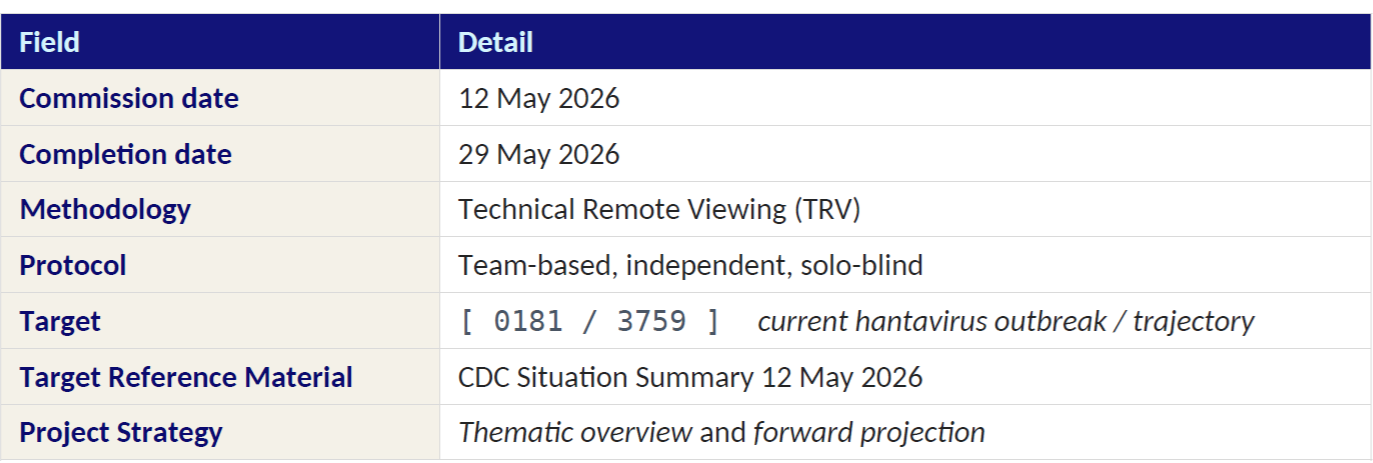
The study employed Technical Remote Viewing (TRV) — a structured, protocol-driven methodology for the acquisition of information regarding a designated target under controlled conditions. The work was team-based: three viewers operating independently of one another, each under solo blind conditions — meaning that no viewer had foreknowledge of the target’s identity at the time of the session. The target was assigned by target reference number (TRN) alone — [ 0181 / 3759 ] — and framed as the current hantavirus outbreak and its trajectory. Target reference material, drawn from the public CDC situation summary, was indexed and formalized on 13 May 2026 at 9:28 AM, establishing context and chain-of-custody. The tasking strategy was, as noted, surface-level: a thematic exploration intended to surface high-level archetypes and directional indicators rather than fine detail. Sessions were conducted across the period of 12 to 29 May 2026.
Note: under blind protocol, the viewer works without conscious knowledge of the target. This guards the data against expectation, leading, and the subtle contamination of foreknowledge.
.
Findings — Roundtable Debriefing
The following debriefs are reproduced from roundtable analysis. Each represents one viewer’s independent perception of the target.
Viewer Jason:
This medical condition requires diagnostic evaluation. In males, it affects a tube-valve system relating to the testicles and presents as a viscous, fibrous mass located within a cavity. The mass may exhibit growth, developing fibrous roots that can lead to solidification. Diagnostic procedures typically involve imaging the testes, such as using an ultrasound or x-ray. Involvement may also extend to the upper chest region and could include thrombosis. While the condition is not considered easily contagious, itsseverity warrants rigorous clinical assessment, which may require hospitalization and intravenous therapy (IV). The diagnostic or treatment process may involve catheterization within the tube system.
Note: Concepts related to imaging may include positioning the testes for scanning on the machine.
Figure 1. Viewer Jason — post-session visual.
Viewer Teo:
The target site is a place where professional people are carrying out a variety of tasks with operational efficiency. Their tasks involve mitigating threats and undesirable factors via technical expertise and predictive intelligence.
Viewer Brian:
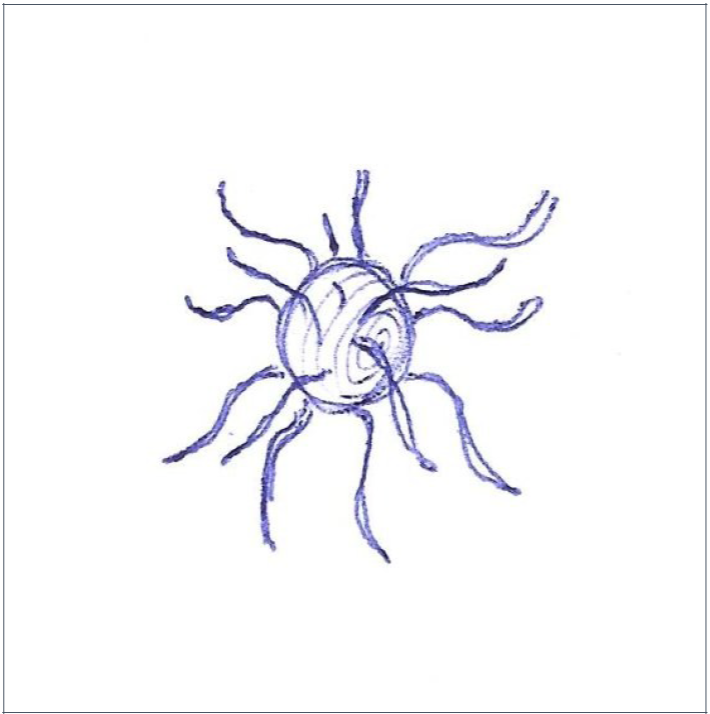
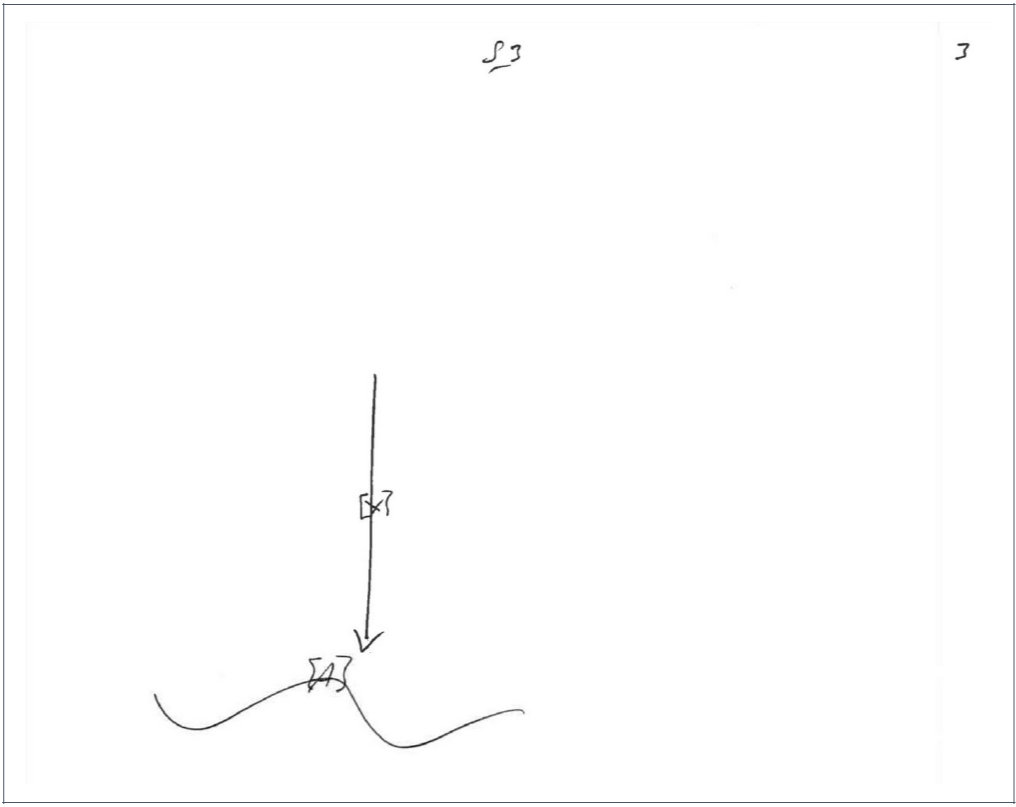
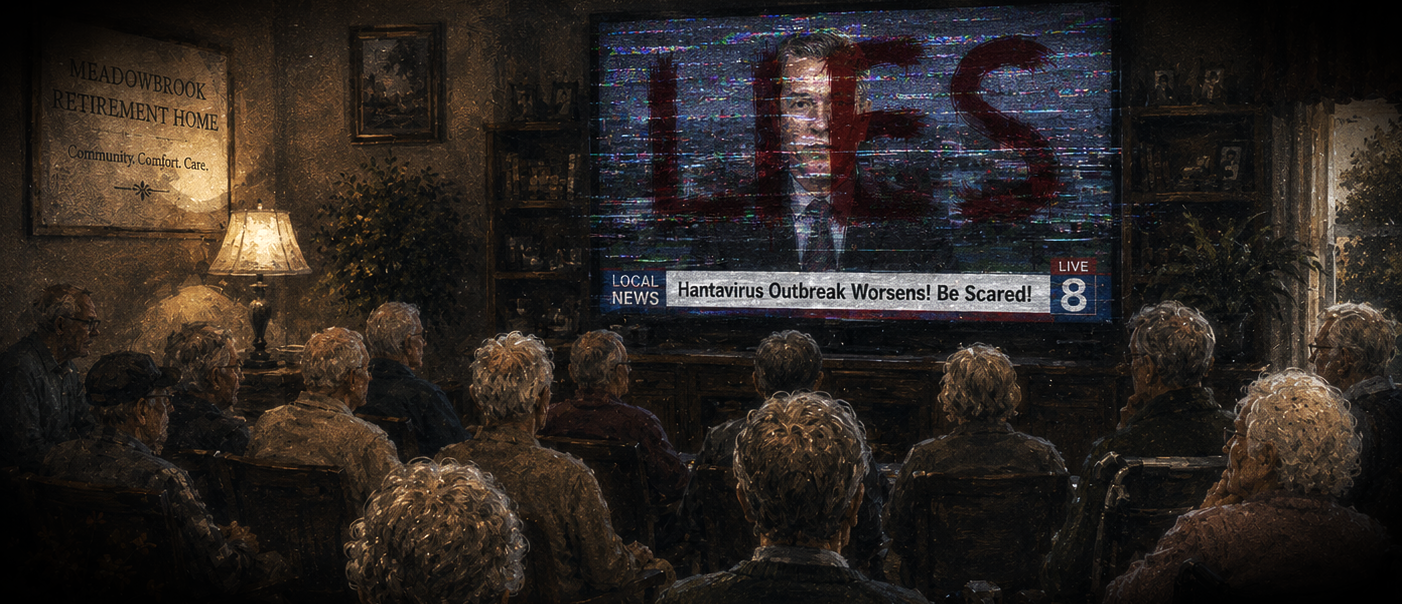
As a professional Technical Remote Viewer, it is always important to investigate one’s S3 Freehand Sketch during analysis. This sketch presents the high-level archetypes of the target. Given this cue, it is important to note that a Remote Viewer and tasker, were they time-pressed, could (with corroboration), have confidently stopped at this point in the session, having actionable data; data indicating that nothing will come of this situation. However the session ran beyond that point, with later stage three and four data presenting the concept of a planetoid crashing towards earth and burning out. Below, there is an effect described as a standing wave, rippling outward, which is designed to scare, insult, and intimidate the planet. The entire session is a metaphor, describing a notable event that burns out quickly, with an element of fear or sensationalism associated, almost certainly via media and social media, possibly seeking to intensify and elongate the crisis, but to no avail.
Figure 2. Viewer Brian — Stage Three (S3) freehand sketch.
Analysis:
Read together, these three independent sessions provide a clear thematic overview of the situation. The first account is dominated by the language of acute clinical severity — a serious medical condition demanding rigorous assessment and intervention. The second locates the target at a site comprised of competent, efficient human activity directed at mitigating the threat. The third, working from the Stage Three sketch outward, resolves the situation as metaphor: a notable event that flares and burns out quickly, attended by a wave of fear and sensationalism propagated largely through media channels, but ultimately amounting to little. Taken individually, none of these is conclusive. Taken together — three viewers, blind to the target and to one another — they describe a coherent arc: a genuinely serious medical threat, actively and capably managed, generating disproportionate alarm, and trending toward resolution rather than escalation. In this case, it is the convergence, not any single session, that carries our assessment.

Conclusions:
Session results cleanly describe the situation and its forward trajectory. We present our conclusions, in no particular order, as three findings.
1. - Clinical severity. Andes virus infection should be considered critical, and clinical treatment should be sought immediately
2. - Competent mitigation. Professionals are actively and diligently working to control and mitigate the situation.
3. - Burnout trajectory. The current outbreak is on a burnout trajectory; some media-propagated fear among the population is present, however, it registers as insignificant in the longer term.
Confidence:
In our assessment, confidence in the directional finding — burnout rather than escalation — is high, owing primarily to the independent convergence of three blind sessions on the same thematic arc. The precise timeline is indeterminate, but the direction is, in our judgement, conclusive.
Final Thoughts:
A closing note. It is easy, in work of this kind, to let the abstraction of trajectory and archetype obscure the human particulars beneath them. The data speaks of burnout and proportion; it does not speak of the individuals for whom this outbreak has already proven fatal. Our regards go out to the deceased, and to their friends and family. That a wider crisis is unlikely to occur is no comfort to those it has already touched — and we would not wish the read tone of this report to suggest otherwise.

Andes Hantavirus Outbreak Trajectory: A Technical Remote Viewing Study
Disclaimer:
This website is created for educational purposes only and does not provide any professional advice of any kind. Professional advice can only be given with a full understanding of a client’s unique personal situation. Accordingly, any recommendations, advice, or information provided on this website should be viewed within the context of general information and education. If you require additional advice or guidance, we recommend you contact us through the contact form above.
Under Section 107 of the copyright act 1976, allowance is made for fair use for purposes such as criticism, comment, news reporting, scholarship, and research. Fair use is a use permitted by copyright statute that might otherwise be infringing. Non-profit, educational or personal use tips the balance in favor of fair use.
All the information posted on this website, unless otherwise noted, is owned and copyrighted by UNIVERSAL INTELLIGENCE LLC.
© 2026 UNIVERSAL INTELLIGENCE, LLC.
All rights are reserved.